Name: Ali Khalifa
Alia National School
Subject: ICT Elective
Submitted to: Mr. Warren
This research paper examines pivotal scientific breakthroughs that have fundamentally transformed human understanding and capabilities in the modern era.
Scientific breakthroughs have repeatedly transformed human understanding and technological progress throughout history (Kuhn, 1962). In recent decades, advances in fields such as genomics, artificial intelligence, quantum computing, and renewable energy have accelerated rapidly, reshaping both scientific research and everyday life (Harari, 2018).
Technologies like CRISPR gene editing, machine learning systems, and renewable energy innovations represent fundamental shift rather than gradual improvements (Doudna & Charpentier, 2014; Russell & Norvig, 2021). While these developments offer powerful solutions to global challenges, they also raise important ethical and societal concerns (Floridi et al., 2018).
This study addresses the following research questions:
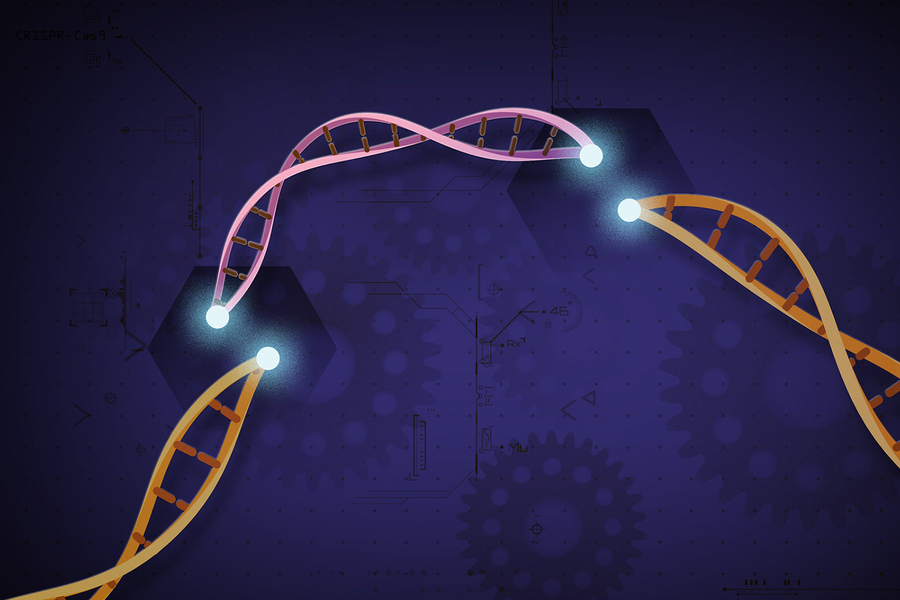
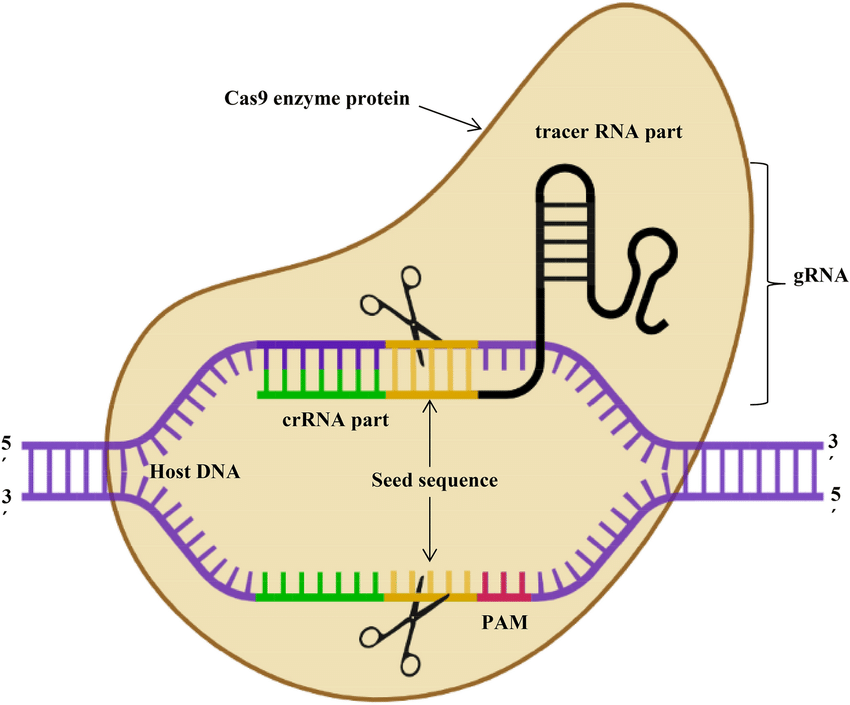
The completion of the Human Genome Project in 2003 launched the genomic revolution by mapping all human genes, and this progress led to the development of CRISPR-Cas9 in 2012, a powerful and affordable gene-editing tool that allows precise DNA modification for medical treatments and improved crops, though it raises ethical concerns about hertiable genetic changes. Quantum computing represents a major shift from classical computing by using qubits that can exist in multiple states at once, enabling extremely fast problem-solving in areas such as cryptography and drug discovery, despite ongoing challenges with stability and error correction. Artificial intelligence has advanced rapidly due to deep learning, large language models - capable of performing complex tasks like language processing and visual recognition, while also prompting concerns about ethics, bias, privacy, and job displacement. At the same time, renewable energy technologies have progressed significantly, as solar and wind power have become cheaper and more efficient, battery technology has improved energy storage and electric vehicles, and breakthroughs in nuclear fusion suggest the potential for abundant clean energy in the future, offering hope for addressing climate change.
The findings from this literature review reveal that recent scientific breakthroughs have significantly reshaped multiple fields, including biology, computing, artificial intelligence, and energy production. Advances in genomics, particularly the development of CRISPR-Cas9, demonstrate how scientific research has moved from understanding genetic information to actively modifying it, offering promising solutions for genetic diseases and agricultural challenges. Similarly, progress in quantum computing shows that traditional limits of computation are being challenged with early demonstrations of quantum advantage indicating strong potential for future technological transformation.
The discussion also highlights that while these innovations offer substantial benefits, they introduct complex ethical, technical, and societal challenges. Artificial intelligence, for example, has achieved remarkable accuracy and efficiency across many applications, yet concerns about bias, privacy, and employment impacts remain unresolved. In the field of renewable energy, dramatic improvements in solar, wind, battery storage, and nuclear fusion suggest a viable path toward addressing climate change, though large-scale implementation and long-term sustainability continue to pose challenges.
Overall, the results suggest that modern scientific progress is characterized by rapid innovation alongside growing responsibility. The reviewed technologies have the potential to greatly improve human life, but their successful integration depends on ethical governance, continued research, and careful consideration of long-term consequences.
The completion of the Human Genome Project in 2003 established the foundation for precision genetic science. Building on this, CRISPR-Cas9 - first described in 2012 by Doudna and Charpentier - revolutionized gene editing by offering an approach that is simpler, cheaper, and more precise than any prior method. Its applications span medicine (e.g., sickle cell anemia, muscular dystrophy), agriculture (climate-resilient, nutrient-enhanced crops), and basic research. However, germline editing raises critical ethical concerns about heritable genertic modification in humans, requiring ongoing regulatory and bioethical scruntiny.
Unlike classical binary computing, quantum computers leverage superposition, entanglement, and interference through qubits to solve certain problems exponentially faster. Demonstrations of quantum supremacy by Google, IBM, and emerging startups mark a shift from theoretical physics to practical engineering. Key applications include cryptography, drug discovery, optimization, and materials science. Core challenges - maintaining quantum coherence and error correction - remain active research frontiers, though commercial viability is projected within the coming decade.
Fueled by deep learning, expanded datasets, and increased computational power, modern AI systems match or surpass human performance across visual perception, speech recognition, and natural language processing. Large language models represent a landmark breakthrough, with implications across scientific research, creative fields, and industry. Advances in computer vision further enable medical diagnostics and autonomous systems. Alongside this rapid progress, critical concerns persist around algorithmic bias, data privacy, workforce displacement, and the long-term alignment of AI with human values.
Driven by the urgency of climate change, renewable energy has undergone rapid advancement. Solar photovoltaic costs have dropped over 90% in the past decade, while wind energy efficiency has improved substantially. Lithium-ion battery breakthoughs now enable practical electric vehicles and grid-scale storage, with next-generation solid-state chemistries on the horizon. Most notably, nuclear fusion experiments have recently achieved net energy gain for the first time - suggesting that virtually limitless, clean fusion power may become a realistic solution to global energy needs within coming decads.
Science advances by building on itself - each breakthrough opens new questions, and what seems like an endpoint is usually a doorway. The most transformative discoveries tend to share a few traits: they challenge assumptions that everyone took for granted, they often come from unexpected place or disciplines, and their full implications aren't understood until years later. At its core, scientific progress isn't a straight line toward "the truth" but a continuous process of refining our understanding of a very complex world.